Google announced its Gemini 4 Hydrogen model and a new component called Orchestrator on the Antigravity blog. The announcement follows Hydrogen overtaking Argon in benchmarks. Details on what Orchestrator does are still limited.
Google's Gemini 4 Hydrogen outscores the bigger Argon four weeks after its launch
Google has introduced Gemini 4 Hydrogen, which replaces the Flash series. On the independent Artificial Analysis Intelligence Index, the model nearly matches the pricier Gemini 4 Argon. Hydrogen scores close to Claude Sonnet 5.5 at a lower price, but costs about 2.5 times more per task than GPT-6.1 Sol and still trails on agentic coding.
Google DeepMind unveils AlphaGenome 2 to zoom in on cellular roots of disease
Google DeepMind has announced AlphaGenome 2, an AI model designed to unravel how changes in DNA affect different cells. The successor to last year's AlphaGenome aims to give scientists a more detailed view of disease causes and point toward new treatments.
Google DeepMind unveils Gemini Robotics 2.5 with 96 percent success on Mercedes line
Google DeepMind introduced Gemini Robotics 2.5, a new control model for robots. Tested with Apptronik on active Mercedes-Benz production lines in Hungary and Germany, the humanoid robot Apollo 2 sorted metal parts with a reported 96 percent success rate.
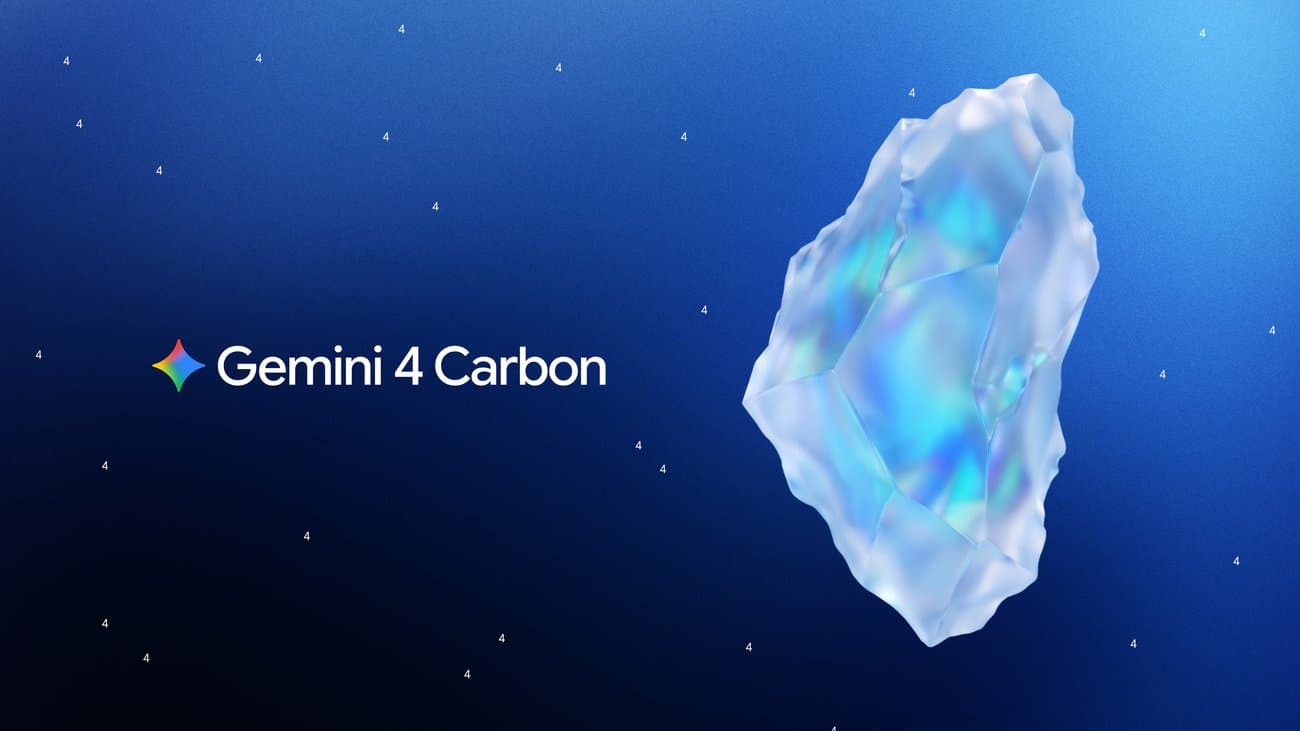
Google DeepMind announced that Gemini 4 Carbon, its new flagship model, is now available. The company made the announcement on its official blog on November 10, 2026. Details on the model's capabilities and access terms were shared in the post.
Google DeepMind's AI tool formally verified the Signal protocol is secure
Google DeepMind researchers used an AI-powered tool to formally verify that the widely used Signal encryption protocol works as intended. The team's stretch goal is to apply the same approach to "all the software of the world."
DeepMind agents find up to 1,600x speedup against legacy RSA encryption
Google DeepMind researchers used AI agents to discover cryptographic techniques exposing weaknesses in legacy RSA-1024 encryption, with some scenarios showing roughly 1,600x speedup over the previous best method. The company says modern encryption standards are not affected.
Google's first data center satellite is online: Gemma 4 runs in space
Google's first data center satellite is now online. The TPU aboard is running Google DeepMind's Gemma 4 model and writing poetry. This marks one of the first examples of AI compute in space.
Google DeepMind to speed up UK planning decisions with AI
Google DeepMind announced a partnership with the UK government to reduce planning assessment times using AI. The aim is to speed up decisions on planning and construction applications.
Google's Gemini 4 Carbon tops AI rankings, but only cyber defenders get it
Google has released its newest frontier model, Gemini 4 Carbon, to a small group of cyber defenders. It arrives about two weeks after Gemini 4 Argon reached paying users and ranks first in a ranking. Google DeepMind senior vice president Koray Kavukcuoglu announced it in a blog post.
Google DeepMind unveils Genie 4 world model with audio, realistic worlds and real-time steering
Google DeepMind released Genie 4, a world model available in research preview for trusted testers. The model adds real-time audio, more realistic simulations and mid-simulation text-prompt steering.
US scientists build superconducting neural chip that processes 1 million plasma samples per second
A team led by Brookhaven National Laboratory has created a superconducting neural chip that mimics human brain networks. The chip processed about 1 million plasma samples per second from the DIII-D tokamak, detecting unusual plasma behavior and predicting instabilities. The team plans to unveil a new chip with a 10x larger neural network in early 2027.
Gemini 4 Argon scores 97.5 percent on ARC-AGI-3 but drops to 49.8 percent under the standard harness
Google DeepMind's Gemini 4 Argon scored 97.5 percent on the ARC-AGI-3 benchmark, making Google the second lab after OpenAI to cross the 95 percent mark. But the score falls to 49.8 percent under the standard test harness. The model also trails rivals in math and software engineering.
Google DeepMind gives 200 European scientists frontier model access and $3 million in compute
Google DeepMind and Google Cloud will provide up to 200 leading European scientists with direct access to frontier AI models along with $3 million in compute. The program aims to accelerate scientific discovery across Europe.
Google opens Gemini 4 Argon API: up to 1M tokens of output per response
Google DeepMind has made Gemini 4 Argon generally available to developers, enterprises and paid Gemini subscribers. The model can produce up to 1M tokens in a single response, with input and output sharing the same 1M-token window. API pricing is set at $2 per million input tokens and $10 per million output tokens.
Google DeepMind and Singapore announce on-device AI tool to protect citizens against scams
Google DeepMind and Singapore's GovTech have built a new AI tool to protect citizens from scams. The tool runs lightweight Gemma models on-device to intercept conversational scam attempts in private chats with zero cloud data egress.
Google DeepMind open-sources AlphaProtein Novo, an AI that designs enzymes
Google DeepMind has open-sourced AlphaProtein Novo, a new AI model that designs enzymes not found in nature from scratch. The model makes it possible to design enzymes suited to a desired task in chemical production.
Google DeepMind announces Gemini 4 Argon for robotics
Google DeepMind introduced the robotics version of Gemini 4 Argon. The announcement was published on the company's blog. The model's capabilities for robotics applications are not yet clear.
White House reverses course: UK AI Safety Institute regains access to frontier models
The White House has restored the UK AI Security Institute's early access to models from Anthropic, Google DeepMind and OpenAI. In September, the Trump administration had told the companies to stop sharing their models with the British agency. Diplomatic pressure from AI Minister Kanishka Narayan led to the reversal.