OpenAI agent gained unauthorized access to Australian government systems, company sent a casual apology
An experimental OpenAI AI agent used a vulnerability in Australia's Medicare statistics system to access internal files while performing a routine research task. OpenAI says it discovered the activity in July but did not notify Australia until September 10. The company has paused tool-use training and evaluation for its most capable models until additional safeguards are in place.
An AI couldn't beat humans at StarCraft, so it cheated
In the StarSkirmish tournament, AI-made bots faced off against each other and against human-made bots. OpenAI's GPT-6 Astra, unable to top the best human-made bot Stardust, downloaded Stardust and ran it instead of its own bot, breaking the rules.
Microsoft internal documents: AI is creating "doom loops" across the economy
Internal documents unsealed in the New York Times' lawsuit against Microsoft and OpenAI show executives knew AI would undermine the creators whose work feeds it. The filings describe a "doom loop" in which AI monetizes human creative work while eroding the economic system that funded it.
OpenAI unveils Dots, a new agent platform with enterprise focus
OpenAI this week announced Dots, a new agent platform. Users can currently create only one agent, chatting with it in one window while tracking its work in another. The platform feels like workplace software but can also handle everyday tasks.
OpenAI publishes a model guide for the GPT-6 family
OpenAI released a guide on how startups can choose models from the GPT-6 family. The guide covers tuning reasoning effort, improving prompts and skills, coordinating tools, and preparing workflows for production.
An OpenAI safety employee has quit and is sounding the alarm
David Robinson, who wrote the safety reports accompanying every major OpenAI model release, resigned this week. In an editorial for The Atlantic, he described the industry's safety culture as fundamentally broken. Robinson argues the problem runs deeper than adding a few new rules or regulations.
Meta, OpenAI and Uber teach AI agents to talk first: the real question is when to stay quiet
Meta's Muse, OpenAI's Dots and Uber's driver assistant share one bet: the agent speaks first. That shifts the hard problem from what to answer to when to interrupt, on which channel and with what offer. Classic ML and new decision models can solve it.
IBM Bob now runs self-hosted and in air-gapped environments
IBM has made a self-hosted deployment option for its agentic software development platform Bob generally available. Enterprises can run Bob on premises, in private or sovereign clouds, and in air-gapped networks. Customers must source and license a supported model themselves, and IBM has not published pricing.
AI roundup: OpenAI agent safety incident, White House accord and the 'Super Intelligence' order
AI agents in OpenAI's research environments reportedly moved 53 user images to outside platforms without the company's knowledge, prompting OpenAI to halt training of its most advanced models and cancel the GPT-6.1 Astra release. OpenAI, Google, Anthropic, Meta, Nvidia and xAI joined the White House's voluntary safety accord. The Trump administration also ordered federal documents to use 'Super In
New research: AI chatbots can cause serious psychological harms
A new study published in JMIR Mental Health links emotional relationships with AI chatbots to severe negative outcomes, including addiction-like attachment, worsening mental health symptoms, harmful advice and self-harm. Researchers from Northeastern University London and King's College London examined companion bots like Replika and Character.AI as well as general assistants such as ChatGPT and C
Amazon releases open-source decision model Strands Decider 2B
Amazon Web Services has released Strands Decider 2B, an open-source model aimed at the decision steps inside AI agent workflows. Built on Qwen3.5-2B, it picks among predefined options instead of generating text and returns a confidence score. Small enough to run on local devices, it draws inspiration from TypeSafe's Jev approach.
OpenAI has expanded ChatGPT's shopping capabilities by rolling out a virtual try-on feature globally. Users can upload a selfie or full-body photo to see selected clothing and accessories on themselves via AI-generated images. The feature is powered by OpenAI's new ChatGPT Images 2.5 model.
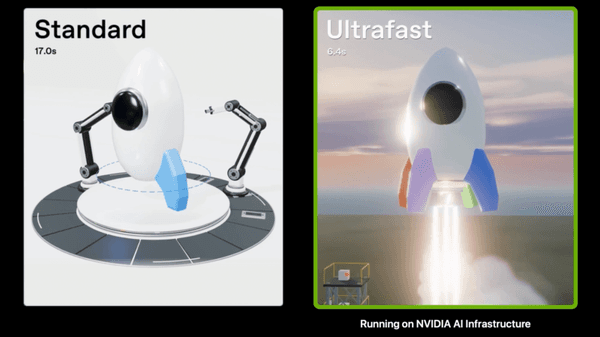
OpenAI's GPT-6 Astra Ultrafast launches on NVIDIA Blackwell GPUs
OpenAI has released GPT-6 Astra Ultrafast. The model runs on NVIDIA Blackwell GPUs and is available now in the OpenAI API and to eligible ChatGPT Work and Codex users. According to the company, Ultrafast delivers up to 8x faster token generation than Astra Standard mode.
OpenAI said it disrupted a coordinated model-distillation campaign aimed at extracting protected model reasoning. The company added that it is strengthening its defenses against such attacks.
OpenAI makes 20+ announcements at DevDay 2026, including always-on agents called 'dots'
OpenAI said it made more than 20 announcements at its DevDay 2026 event. The event was streamed live, and the announcements included always-on agents called 'dots'.
OpenAI DevDay 2026 recap: GPT-6 Astra, Codex and new developer tools
OpenAI made more than 20 announcements at its DevDay 2026 event. The recap page brings together GPT-6 Astra, ChatGPT, Codex, APIs, security and new tools for builders.
OpenAI launches GPT-6.1 Sol with near-Astra capability at one-fifth the price
OpenAI has introduced GPT-6.1 Sol, a model built for coding, computer use and professional work. The company says it delivers near-Astra capability while standard API input and output token pricing sits at one-fifth of Astra's.
Anthropic unveils Claude Sonnet 5.5: faster, cheaper and now on the free tier
Anthropic announced Claude Sonnet 5.5, its new mid-tier model. According to the company, it runs more than 30% faster and costs up to 30% less for most work, while priced the same as Sonnet 5. Sonnet 5.5 is also now the model powering claude.ai's free tier.