

Skip to content
Sıfırıncı Dakika
Latest

Nvidia CEO's foundation grants huge cloud allocation to protein research institute

Science2 min read

In brief

The University of Washington Medicine Institute for Protein Design (IPD) has received a grant of nearly 7 million GPU hours of cloud computing from the Jen-Hsun and Lori Huang Foundation. The institute has been accessing Nvidia GPUs through cloud provider CoreWeave since June, and the allocation is expected to support it for a year. IPD director and 2024 Nobel chemistry laureate David Baker called

  • Nearly 7 million GPU hours of cloud computing grant from the Jen-Hsun and Lori Huang Foundation
  • Access to Nvidia GPUs via CoreWeave since June
  • Allocation expected to support the institute for a year
  • Open-source protein tools such as RoseTTAFold and RFdiffusion
  • Expanded research capacity beyond the institute's own limited computer cluster

What happened

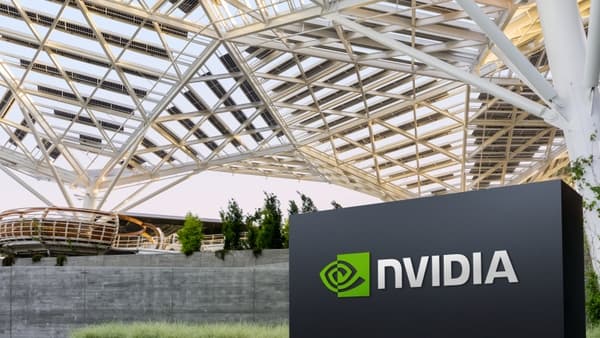
The Institute for Protein Design (IPD) at UW Medicine has received a grant of nearly 7 million GPU hours of cloud computing from the Jen-Hsun and Lori Huang Foundation, co-founded by Nvidia CEO Jensen Huang and his wife, Lori Huang. The institute has been accessing Nvidia GPUs through cloud company CoreWeave since June, and the allocation is expected to support it for a year.

Why it matters

The IPD has long relied on computational methods for protein research. In 2003, David Baker and fellow University of Washington researchers used their Rosetta software to design a protein with a structure unlike any known in nature. In recent years the institute has embraced deep learning, releasing tools such as RoseTTAFold for predicting protein structures and RFdiffusion for designing new proteins. These tools are open source and available for public use.

From limited capacity to broader means

Until now the institute lacked the resources to pay for outside cloud services and relied on its own computer cluster. Baker said IPD scientists meet every Tuesday at 5 p.m. to decide what to test over the coming week, keeping capacity in mind. Because of compute restrictions, researchers historically made multiple changes at once rather than testing each alteration individually.

Open-source tools and scientific impact

With these tools, the institute designs previously unimagined proteins with potential for treating intractable diseases and tackling environmental challenges such as plastic waste and toxic pollutants. Despite the hurdles, the IPD publishes regularly in leading journals such as Nature and Science. Google DeepMind is pursuing similar AI-driven protein research.

Baker said the new compute capabilities spawn more ideas because researchers know they can test them, and that the team is iterating fast. Jensen Huang, the foundation's co-president, said the extra computing power allows UW researchers to train AI on tens of millions of molecular structures and find novel protein designs that have eluded nature, predicting that many of the most important future medicines will come from proteins that have never existed.

Why it matters

It shows how decisive computing power is in AI-driven scientific research; the capacity boost behind open-source protein tools could accelerate drug and environmental research.

Sources

Related stories