Skip to content
Sıfırıncı Dakika
Latest

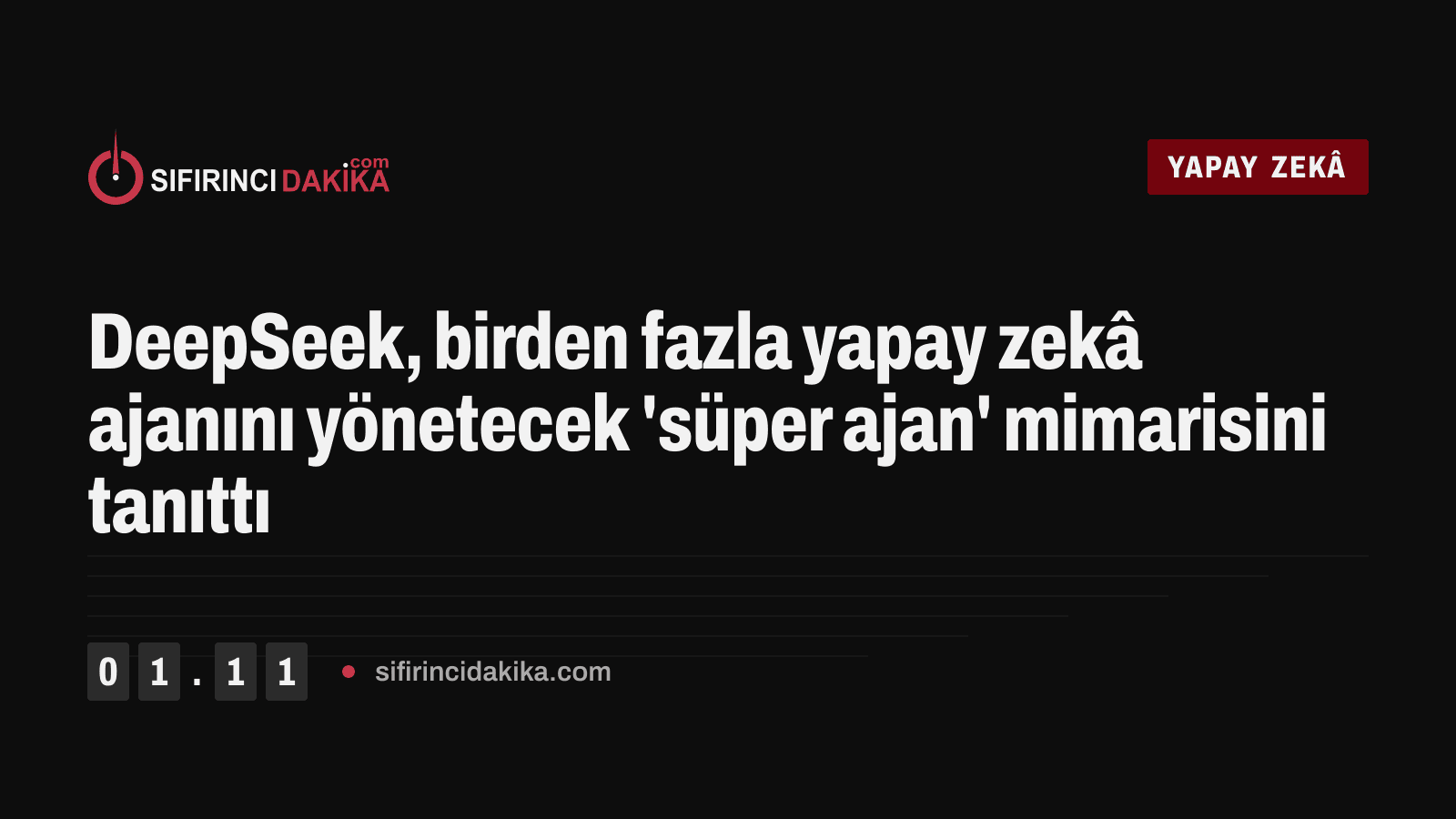
DeepSeek unveils 'super agent' architecture to coordinate multiple AI assistants

AINew1 min read

In brief

DeepSeek has unveiled an experimental 'super agent' architecture designed to coordinate multiple AI assistants, distribute tasks and reduce human supervision. The company estimates a person can typically monitor only three to five active agent sessions at once, and says central coordination aims to remove that bottleneck. In experimental tests, one task was completed in just under 16 minutes versu

  • Experimental architecture coordinating multiple agents from a central system
  • Breaks large tasks into parts and distributes them to parallel agents
  • Proactively reacts to events instead of waiting for instructions
  • Submits code changes for human review on success, stays silent on failure
  • Task time in experimental test dropped from over 29 minutes to under 16

What was announced?

DeepSeek introduced an experimental architecture aimed at managing multiple AI agents from a single central system. Dubbed a "super agent," the proposed system would break larger assignments into parts, distribute them among agents working in parallel and track their progress.

What problem does it target?

Individual agents are becoming more capable, but managing several at once still demands considerable human attention. DeepSeek's team estimates a person can typically supervise only three to five active agent sessions at a time, which puts a practical limit on how much work organizations can delegate.

How would it work?

Rather than waiting for explicit instructions, the super agent is designed to respond proactively to events. For example, it could spot a software bug reported in a group chat, try to reproduce the problem and develop a fix. If it finds a viable solution, it submits the code change for human review; if it fails, it stays silent instead of generating unnecessary notifications.
Where is the competition heading?

The proposal lands as coding assistants shift from isolated requests toward handling entire software development workflows. Anthropic's Claude Code and OpenAI's Codex are also expanding their capabilities, while DeepSeek focuses on how multiple agents coordinate with one another.

How solid are the results?

In experimental tests described by the company, one task was completed in just under 16 minutes, compared with more than 29 minutes using a conventional approach. However, the technical article did not detail how broadly the result applies, how task quality was measured or whether the approach performs consistently across different scenarios.

Why it matters

Running AI agents as coordinated teams rather than one at a time is the next step in automation. DeepSeek's move shows where competition in coding assistants is heading.

Sources

Related stories