Skip to content
Sıfırıncı Dakika
Latest

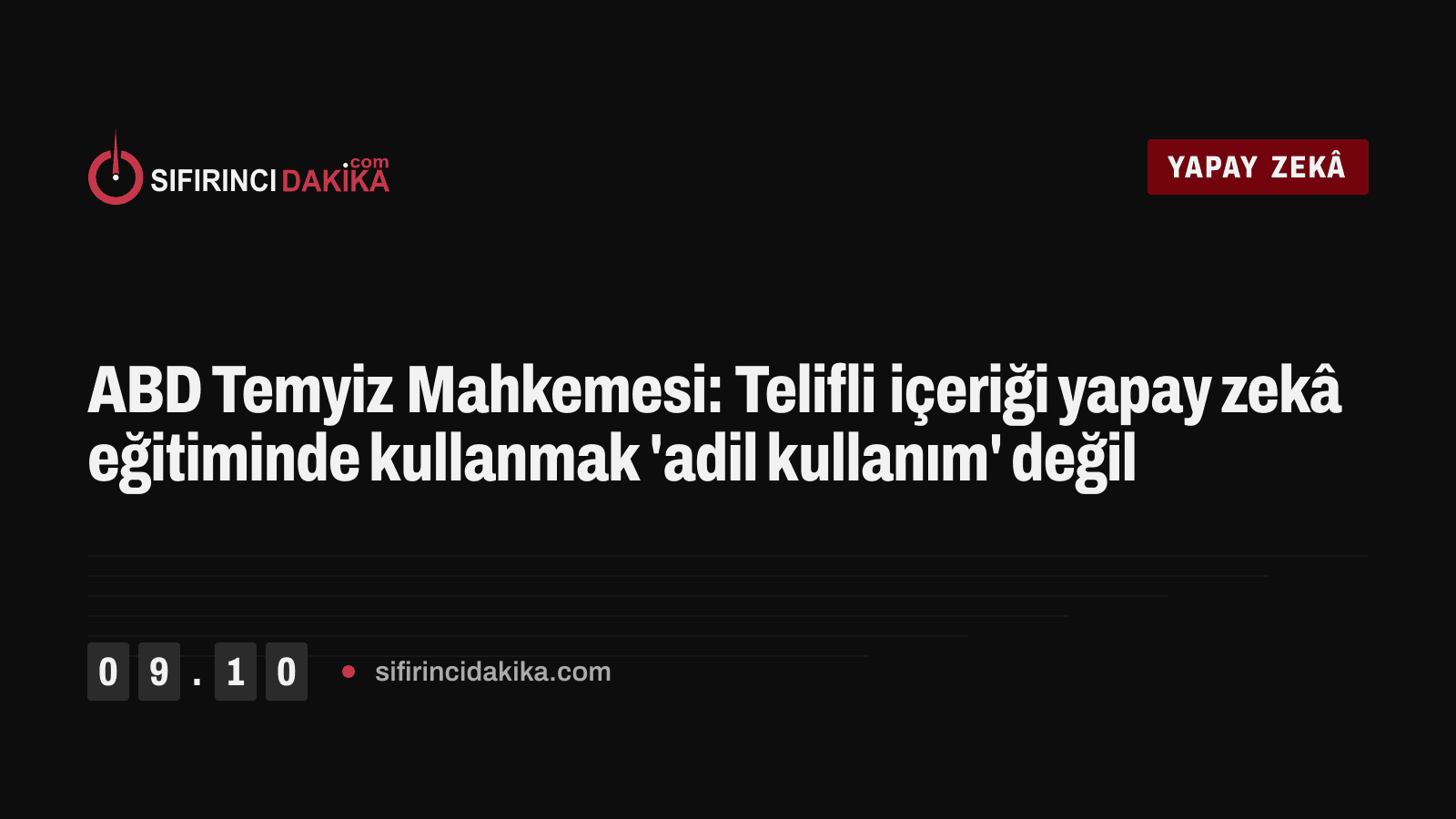
US Appeals Court: Using Copyrighted Material as AI Training Data Is Not Fair Use

AIUpdated: 1 min read

In brief

The US Third Circuit Court of Appeals upheld a ruling that Ross Intelligence violated copyright law by training its AI legal search engine on copyrighted summaries from Thomson Reuters' Westlaw database. According to Reuters, it is the first ruling of its kind by an appeals court, and it weakens the AI industry's 'fair use' defense.

What the precedent says

The US Third Circuit Court of Appeals upheld a lower court ruling that legal research company Ross Intelligence violated copyright law by using copyrighted "headnotes" — short editorial summaries — from Thomson Reuters' Westlaw platform to train its search engine. According to Reuters, this is the first appeals court ruling on the issue.

Why it matters

The "fair use" doctrine under the US Copyright Act is the core defense for AI companies in dozens of lawsuits filed by rights holders. OpenAI CEO Sam Altman previously said the AI race would be "over" if this provision were ever overturned.

Why the ruling is narrow

The court found that Ross copied the headnotes verbatim and that its use was not "transformative." The Delaware federal judge in the original ruling wrote that Ross took the headnotes to make it easier to develop a competing product. Ross shut down in 2021 due to litigation costs.
The industry is split

Aaron Moss of Copyright Lately argues the case is not the "best vehicle for a sweeping ruling" on generative AI: it reached the Third Circuit on interlocutory review, damages remain unresolved, Ross no longer exists, and its AI wasn't generative. The tech industry group Chamber of Progress, meanwhile, read the ruling as a win, saying it "implicitly confirms that highly transformative gen AI training" is likely fair use.

What's next

A hearing in a separate lawsuit by Concord Music Group, which accuses Anthropic of unlawfully using thousands of copyrighted song lyrics to train its Claude model, is scheduled for later this month. Ross's remaining backers say they will take the case to the Supreme Court.

Why it matters

This precedent could reshape the legal ground for how AI models are trained, affecting content creators and AI startups well beyond the US.

Sources

Related stories