
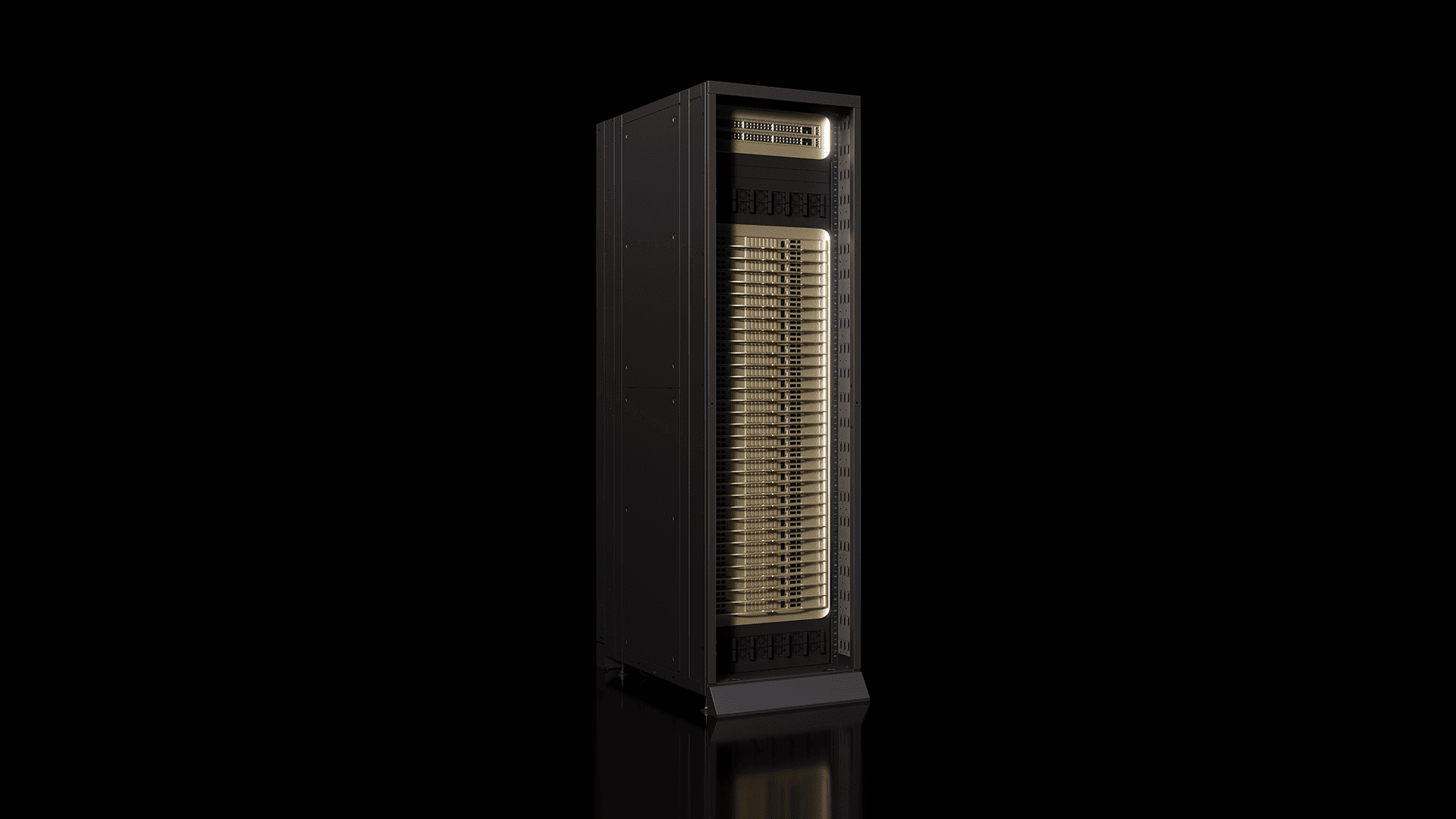
Why agents depend on CPUs
According to NVIDIA, AI agents do more than generate answers: they search for information, query databases, write and test code, and take action. Each of these steps runs on a CPU, with agents moving between GPU reasoning and CPU execution throughout a task. Running more agents at once therefore depends on CPU capacity and power limits.
Vera's claims
In a 100-megawatt data center comparison, NVIDIA says a single Vera CPU performs better than both the fastest and the most energy-efficient x86 CPU. The company claims Vera enables 1.6x more agents per watt versus the fastest x86 CPU and delivers 2x faster agent speed versus the most energy-efficient x86 CPU. The goal is to use one CPU for a range of agent workloads instead of mixing fast and dense x86 parts.
Early adopter results
NVIDIA shared the following results from production-style tests:
- Perplexity: Ran agentic coding tasks 1.5x faster than on traditional CPUs and plans to deploy Vera in an upcoming production system.
- DeepInfra: Delivered up to 2.2x the speed of the best x86 processor on its production agent workload.
- ClickHouse: Its standard binary, with no Vera-specific tuning, scaled near-linearly across 176 cores and topped the ClickBench hardware leaderboard.
- DuckLabs: Achieved about 1.5x the median TPC-H SF1000 performance of an Intel Xeon 6 baseline.
- Daytona: Brought 1,000 agent sandboxes online in 10.8 seconds, versus 88.4 seconds on x86.
- Modal: Achieved up to 2x sandbox throughput per core versus comparable x86 hardware.
Why it matters
NVIDIA emphasizes that operators in power-limited data centers need to maximize work done for every watt. Vera aims to combine fast and dense agent workloads in a single CPU. The company points readers to its blog post for more details on the CPU.