Skip to content
Sıfırıncı Dakika
Latest

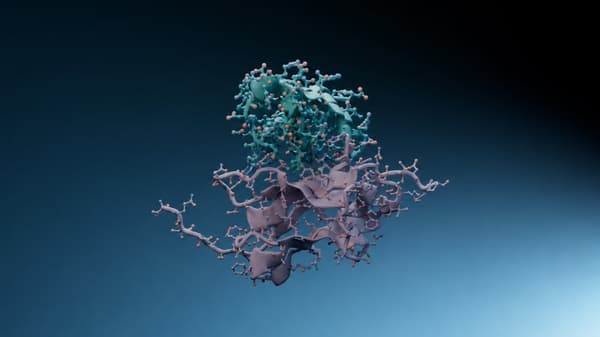
NVIDIA unveils RFD4-Proteina, an open protein design model for drug discovery

AILaunch1 min read
NVIDIA Newsroom

In brief

NVIDIA and the UW Medicine Institute for Protein Design released RFD4-Proteina, an open model that combines programmable protein design with search capabilities. The company also announced collaborations with Siemens Healthineers on adaptive radiotherapy and with organizations building scientific agents on its BioNeMo platform.

  • Open model combining programmable protein design with search
  • Design search using molecular inputs, constraints and scoring objectives
  • Higher design success rate and throughput across four benchmark suites
  • Available via partners including Hugging Face, Google Cloud, AWS and OpenAI
  • Adaptive radiotherapy collaboration with Siemens Healthineers

An open model: RFD4-Proteina

NVIDIA, together with the UW Medicine Institute for Protein Design, released RFD4-Proteina, a new open model that combines programmable protein design with search capabilities. Scientists can search and refine designs using molecular inputs, constraints and scoring objectives.

According to the company, the model achieved higher computational design success rates and generation throughput than evaluated baselines across four benchmark suites: protein binding, small-molecule binding, enzyme scaffolding and DNA binding. It is available today through partners including Amazon Bio Discovery, Anthropic's Claude Science, Benchling, Databricks, Google Cloud, Hugging Face, Nebius, OpenAI and Tamarind Bio.

Precision in cancer care

NVIDIA said Siemens Healthineers is advancing next-generation adaptive radiotherapy using its technology, with agentic co-planning, patient-specific simulation and robotic control aimed at widening access to cancer care.

BioNeMo and scientific agents

Automata, Benchling, Biolevate, Boltz, Danaher, Hologen and Therna Biosciences are using NVIDIA's open BioNeMo platform to build scientific agents that connect drug design, autonomous laboratories and biological discovery, helping researchers move from hypothesis to experiments faster.

Kimberly Powell, vice president of healthcare at NVIDIA, said agentic and physical AI are opening new possibilities across medicine, from protein design to personalized cancer care. Making the model open is intended to let researchers build on these capabilities.

Why it matters

A concrete example of how fast open models are advancing in protein design and cancer care, valuable for readers curious about where AI in healthcare is heading.

Sources

Related stories