From simulation to delicate work
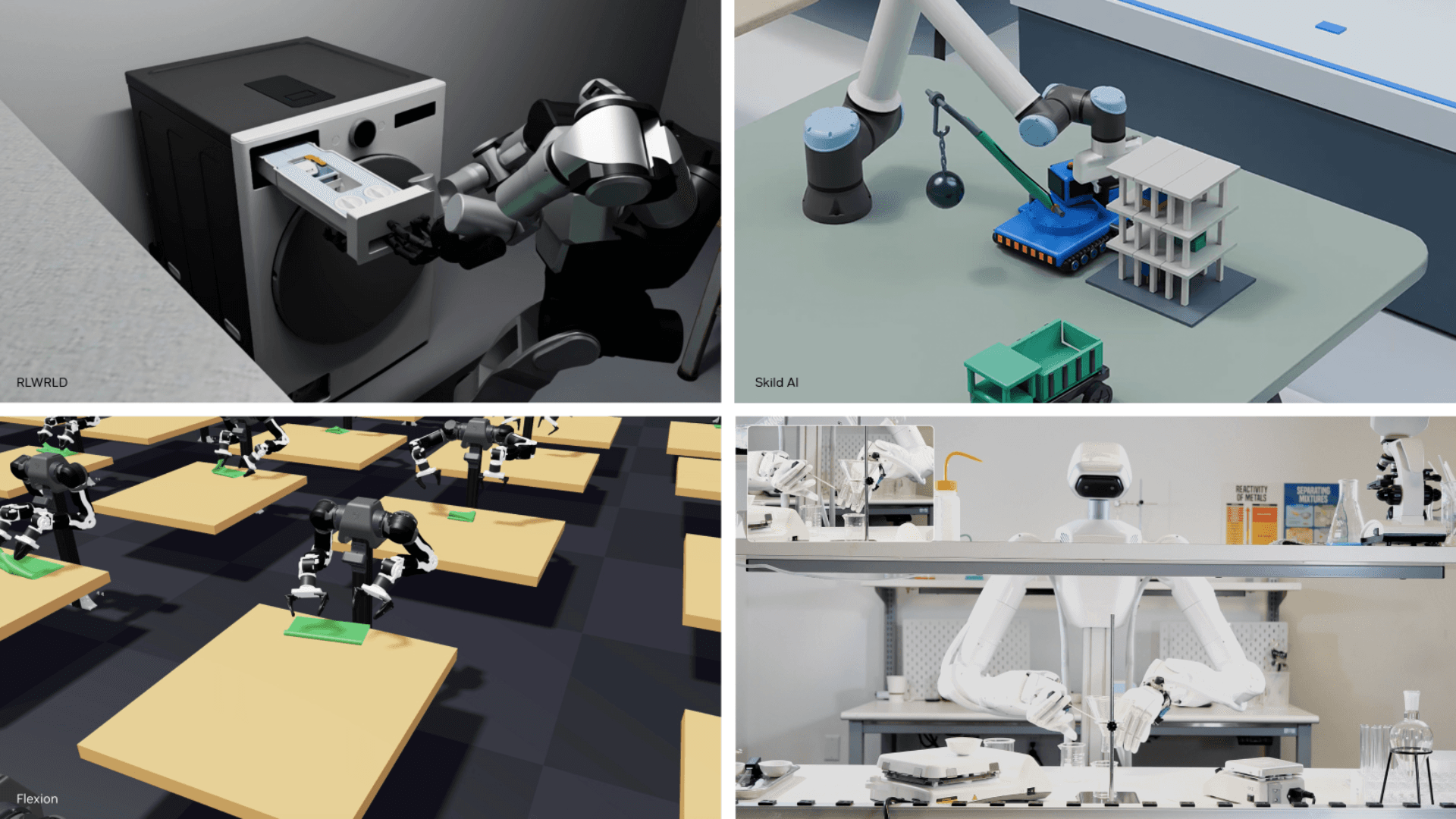
At the Conference on Robot Learning (CoRL) in Austin, NVIDIA introduced open robotics technologies showing how robots rehearse delicate tasks in simulation. The company focused on the shift from locomotion to manipulation: aligning gears, connecting cables and assembling small components.
What is GR00T 2?
Built on NVIDIA Cosmos, GR00T 2 is an open world action model. It was trained on diverse robot and human data, including 100,000 hours of open-source human egocentric data, to help robots learn dexterous manipulation skills.
- Out-of-the-box performance: Completed 40 of 50 evaluated tasks at least once without task-specific demonstrations.
- Skill transfer: Learns from human demonstrations and transfers skills between robot bodies.
- Generalization with little data: 71% average success across 50 tasks with one demonstration, rising to 95% with five.
- Agent control: AI agents can use the API to run skills in sequence and recover from errors.
Who is using it?
Nexuni is testing it for robotic laundry handling, Foxconn for factory automation in server manufacturing, and Siemens across industrial use cases. MicroAGI uses a reinforcement-learning post-trained version for Ethernet cable swapping.
Research awards and partners
Two NVIDIA papers are among six finalists for the CoRL Best Paper Awards: GRAIL, a pipeline for generating humanoid loco-manipulation, and RoboTTT, which scales visuomotor context three orders of magnitude. NVIDIA is working with partners including Ambi Robotics, Bosch Research, Siemens, Skild AI, UC Berkeley and the University of Washington.