
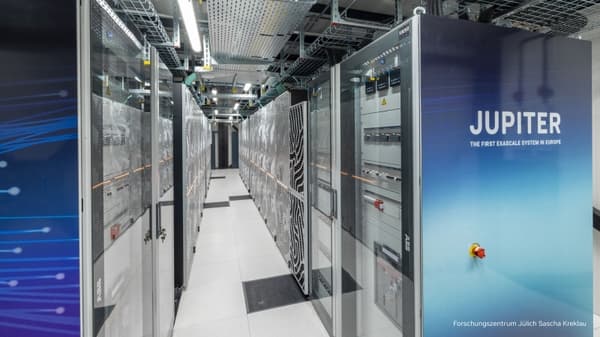
Record simulation on JUPITER
NVIDIA ran a 104-qubit fault-tolerant quantum computing simulation on JUPITER, Europe's first exascale supercomputer. The work, carried out on a system of NVIDIA GH200 GPUs at the Jülich Supercomputing Centre, is described by the company as the largest comprehensive simulation of a fault-tolerant quantum processor to date.
What was validated
The simulation tested an approach called magic state cultivation under realistic noise. According to NVIDIA, this leading approach to fault-tolerant quantum computing requires 90% fewer physical qubits than previous methods. Because qubits operate at the limits of physics, the interactions needed to control them introduce unavoidable noise; fault-tolerant computing aims to produce correct results despite it.
Why it matters
Earlier work at Jülich simulated 50 qubits under ideal, noiseless conditions. The new simulation models behavior under realistic hardware noise, letting researchers understand the impact of errors and refine designs before hardware is built.
Target applications
NVIDIA says such simulations could shorten the path to useful quantum applications in drug discovery, financial modeling and materials science by years. CEO Jensen Huang said the results show how quantum processors and GPU supercomputers can work together.